App
 Languages
 Stories
 Become a creator
 Featuring program
 Affiliate program
 Beta program
 one sec × LENGO
 Contact & help
 Team & jobs
 Press kit
 Privacy
 Terms
A world that understands: LENGO’s mission to bring people together
 LENGO
October 29, 2026 · 13 min read

Imagine arriving in a place where you cannot explain what you need. You have the same thoughts, experience and hopes you had yesterday, but the words around you have changed. A simple question takes courage. Then someone slows down, listens and helps you find a sentence. The world becomes a little less closed.
This is an imagined everyday scene, but it captures the reason LENGO exists. We want to help people understand one another. Learning a language can give someone the confidence to introduce themselves, ask for help, make a friend, take part in a community or hear a story that would otherwise remain out of reach. Behind every exercise is the possibility of a real conversation.
Our mission is to unite people by strengthening their ability to communicate. We believe there is good in people across every border. That belief asks something of us: curiosity when a person seems unfamiliar, patience when understanding takes time, and the courage to protect another person's dignity even when we disagree. It also asks us to be honest about harm. Compassion is strongest when it can face reality.
The distance between knowing a word and knowing a person
A dictionary can tell you what a word means. A conversation can tell you why it matters. The word home may describe an address for one person and a place they cannot return to for another. Safety may mean a quiet street, a secure job, freedom to speak or the knowledge that a child will come back from school. Familiar words can hold very different experiences.
When we learn another language, we gain more ways to ask about those experiences. We become less dependent on a headline, a slogan or someone else's summary of an entire country. We can listen to a neighbour, read a writer, understand a colleague or notice that a joke was never meant as an insult. None of this makes us experts on another culture. It gives us a reason to keep asking.
Communication also changes who gets to participate. Someone who struggles to explain a problem may be mistaken for someone who has no opinion. A parent who cannot follow a school meeting may appear uninterested while caring deeply. A newcomer may have valuable professional knowledge but no easy way to share it. Better language skills can help people show who they already are.
What LENGO can contribute
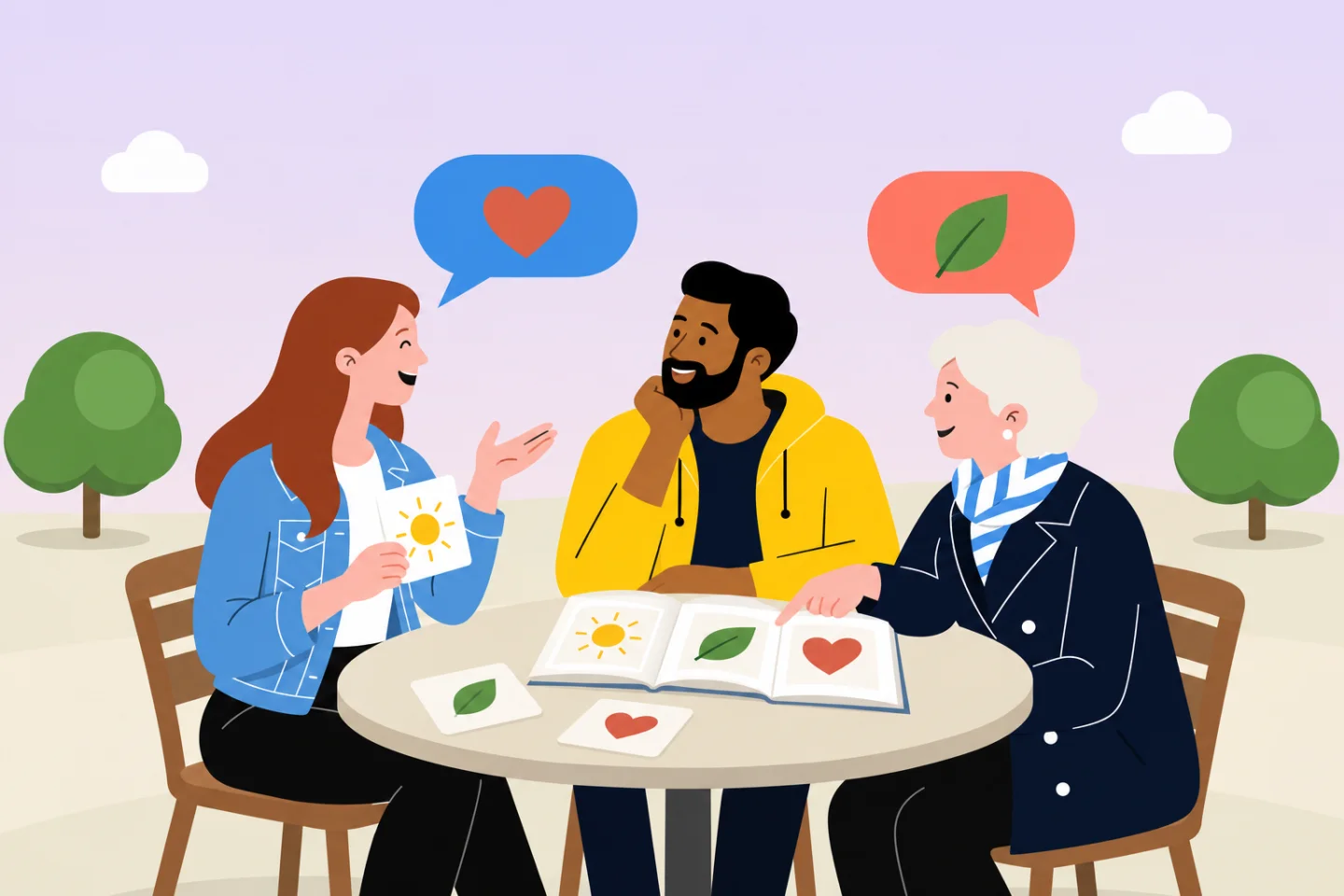
LENGO brings vocabulary practice, grammar explanations, audio and opportunities to review into everyday learning. Learners can work with existing material and add vocabulary that matters to their own lives. Free grammar lessons on our website offer another place to begin. These are practical tools for a larger purpose: helping people become more confident participants in the conversations around them.
A useful learning goal can be very small. Explain a food allergy. Ask a colleague to repeat an instruction. Welcome a new classmate. Describe what you meant after a difficult exchange. Small moments of independence matter, especially when someone has spent a long time relying on others to speak for them.
We want learning to be accessible and encouraging, with room for mistakes. Nobody should have to sound like a native speaker to deserve respect. Accents carry personal histories. Asking for a slower explanation is a sensible request. Learning the language of a new home can widen a person's choices while their first language remains a valued part of their identity.
We should also be clear about the scale of our contribution. LENGO is a language learning platform. We do not claim to mediate wars, provide emergency interpretation or have evidence that using our app prevents violence. Our mission describes the world we want to help build and the everyday work we can do toward it.
How communication can keep disagreement from becoming hostility
A disagreement often becomes harder when people begin guessing at each other's intentions. A short reply becomes contempt. A delay becomes rejection. A request becomes a threat. Language barriers can add another layer of uncertainty, especially when people are tired, frightened or embarrassed. A question asked early can sometimes prevent a misunderstanding from hardening into a story about the other person's character.
One useful habit is to describe what happened before judging why it happened. Saying that you did not receive an answer leaves room for an explanation. Saying that the other person never cared closes that space. Another habit is to check your understanding in your own words and invite correction. Listening carefully means allowing the answer to change what you thought you knew.
People also need ways to express limits. Good communication includes saying no, asking for safety and ending an exchange that has become threatening. Nobody owes a dangerous person a conversation. In a serious dispute, a trained mediator or qualified interpreter may be needed. The ability to talk helps most when people also have the freedom to speak and the protection to disagree.
War has causes far beyond misunderstanding, including political choices, struggles over territory and power, repression and material interests. People can speak the same language and still commit terrible violence. Communication can expose a false assumption, clarify a warning or make an agreement possible. It cannot replace security, rights, accountability or the willingness to stop harming others.
Christmas 1914 and the humanity that survived the trenches
During the First World War, unofficial truces took place along parts of the Western Front at Christmas in 1914. British and German soldiers exchanged greetings and gifts, and in some places met between the trenches. The National Army Museum describes these encounters and the opportunity they gave soldiers to recover and bury their dead. The truce was not universal, and it did not end the war.
The value of remembering it lies in that tension. Men who had been ordered to fight could still recognise something familiar in each other. A voice, a greeting or a shared ritual briefly made room for another kind of encounter. Yet personal goodwill was not enough to overcome the military and political forces continuing the war.
For us, the lesson is modest and demanding. Human connection can survive extraordinary hostility, but it needs protection and lasting structures if it is to grow. We should remember the humanity of the encounter without turning a temporary pause into an easy explanation of peace. Read the National Army Museum account of the 1914 Christmas Truce.
The Cuban Missile Crisis and the need to be understood precisely
In October 1962, the United States and the Soviet Union came close to nuclear conflict during the Cuban Missile Crisis. Official messages and private diplomatic contacts helped create a way out. The settlement involved the removal of Soviet missiles from Cuba, a United States commitment not to invade Cuba and a private assurance concerning the removal of United States missiles from Turkey.
This was not a friendly conversation that dissolved every disagreement. It was a dangerous negotiation in which leaders needed to understand intentions, weigh consequences and make concrete commitments. The crisis illustrates why a message must reach the right person, why private channels can matter and why public humiliation can make an already difficult choice harder.
A direct communications link between Washington and Moscow followed in 1963. Its purpose speaks to a lasting need: when the stakes are high, uncertainty and delay can become dangerous. Ordinary language learning is far removed from nuclear diplomacy, but both remind us that understanding requires more than sending words. Read the United States Office of the Historian account. Read about the communications link established in 1963.
Northern Ireland and room for different identities
The Belfast Agreement, also known as the Good Friday Agreement, was signed on 10 April 1998 after decades of conflict in Northern Ireland. It established arrangements for sharing power and recognised principles of consent, mutual respect and the right of people in Northern Ireland to identify as British, Irish or both.
Its relevance is not that every conflict can copy the same institutions. It shows how a political agreement can make space for identities that do not merge into one. People do not need identical memories or a single account of belonging before they can begin building arrangements for living together.
Negotiation needed institutions, commitments and continued work after the signatures. That is an important limit to any story about dialogue. Peace has to function when trust is incomplete and disagreements return. It needs ways to deal with those disagreements without returning to violence. Read the agreement and the Northern Ireland Office explanation.
Seeing people clearly without excusing harm
To see the good in all people is to refuse the idea that nationality, religion or language determines a person's moral worth. It does not mean every action is good, every claim is true or everyone bears equal responsibility for a conflict. We can recognise the humanity of someone whose actions we condemn. We can care about civilians in several countries at once.
A child should not inherit guilt for a government's decisions. A person should not have to defend everything done under their country's flag before receiving compassion. Equally, a survivor should not be pressed to forgive, meet an aggressor or set aside what happened to them in the name of reconciliation. Respect includes the right to decide when contact is safe and whether it is wanted.
The suggestions that follow are possibilities for discussion, not a negotiated peace plan or a claim to speak for the people affected. They reflect our conviction that civilian protection, truthful communication and human dignity belong together. This article was prepared on 29 October 2026. Conditions and negotiations can change, so the linked sources should be read with their publication dates in mind.
Russia and Ukraine: start with lives that can be protected
Russia launched its full scale invasion of Ukraine in February 2022. In its September 2026 account of the United Nations General Assembly, the UN in Ukraine reiterated the Secretary General's condemnation of the invasion as a violation of the UN Charter and his call to protect civilians and ensure humanitarian access. A humane discussion of peace needs that factual context. Recognising it does not make Russian civilians less deserving of dignity or safety. Read the UN account from 24 September 2026.
A practical starting point would be to pursue specific humanitarian agreements even while larger political questions remain unresolved. Negotiators could prioritise access to people in detention, exchanges where agreement is possible, the identification of missing people, family contact and the safe return of children unlawfully transferred or deported. Qualified humanitarian organisations should be able to carry out their work safely and independently. Each arrangement would need clear responsibilities and verification.
Local arrangements to protect civilians would need much more than an announcement. For any agreed evacuation or pause in fighting, people would need reliable information in languages they understand, clear times and routes, accessible transport and a way to report a breach. Nobody should be pressured to leave or return to an unsafe place. Medical care, drinking water and electricity should not become bargaining tools.
A broader ceasefire proposal would need a shared written understanding of what stops, where it stops, how compliance is observed and what happens after a reported violation. Direct military communication and an agreed independent monitoring mechanism could help prevent an incident from triggering further escalation. The details would need to be accepted and workable on the ground. A ceasefire can reduce immediate suffering without by itself settling the underlying dispute.
Lasting negotiations must involve Ukraine meaningfully in decisions about its future, respect sovereignty and territorial integrity, and address security in terms that can actually be implemented. The people who have lost homes, relatives and livelihoods need a voice, including displaced people and communities whose experiences are easily overlooked. Reconstruction, accountability and the safe, voluntary return of displaced people cannot be treated as afterthoughts.
At a personal level, language learning can help neighbours welcome displaced families, help children participate in school and help people tell their own stories. Ukrainian identity and language deserve respect. Speaking Russian does not establish a person's political beliefs. Any contact between communities divided by the war should be voluntary, sensitive to trauma and designed around participants' safety. No language exercise can ask people to pretend the war has not happened.
Iran: make diplomacy specific enough to test
Iran is a country of people with different experiences, beliefs and hopes. Discussions about its government, its nuclear programme and regional security should never erase that diversity. The same care belongs to people in neighbouring countries and every other country affected by confrontation. In a statement published on 26 October 2026, the United Nations reported the Secretary General's call for dialogue and diplomacy to end the war between Iran and the United States. Read the dated UN statement.
A useful diplomatic process could separate urgent protection from the hardest questions about the future. Reliable channels through mutually accepted mediators could carry warnings, clarify intentions and pursue concrete steps to reduce attacks and protect civilians. Quiet talks can give negotiators space to examine options, while public information should make clear what has actually been agreed. A rumour about a deal is not a deal.
Nuclear questions require technical verification, not confidence in reassuring language alone. A possible agreement would need clearly defined commitments, arrangements for International Atomic Energy Agency access and monitoring, and agreed procedures for unresolved questions. Any reciprocal steps concerning sanctions would need a lawful, explicit sequence linked to verified implementation. This is a proposal about the design of diplomacy, not a claim that such a settlement has been reached.
Regional arrangements could also address the safety of shipping, emergency communication and the risk that an incident is misread as the beginning of a wider attack. A workable process would need the participation of the states whose security is directly affected. Mediation by countries trusted for that role could help maintain contact when direct discussions become difficult. Regional diplomatic efforts described by the UN in July 2026 offer context, but that account should not be mistaken for confirmation that an earlier ceasefire still holds. Read the UN briefing from 2 July 2026.
People's rights within Iran also matter. Peace cannot be measured only by relations between governments. People need safety, access to information and room to express themselves without violence or coercion. Cultural and educational contact can help people see one another beyond official narratives, but participation must be voluntary and sensitive to the risks individuals may face. No one should be asked to endanger themselves to demonstrate openness.
LENGO's contribution here is educational. Learning a language can help someone hear a personal account, understand a cultural reference or welcome a neighbour. It is no substitute for professional interpretation in negotiations, qualified reporting, humanitarian work or nuclear expertise. Respecting those limits is part of taking the mission seriously.
What a more peaceful conversation can look like today
Begin with a question that leaves room for a real answer. Ask what someone wants you to understand about their experience. If a word is unclear, say so. Try to separate what you witnessed from what you assumed. When you repeat another person's point, let them correct you before you respond. These habits do not guarantee agreement, but they make careless misunderstanding less likely.
When discussing a conflict, name the specific decision, institution or action you mean. Avoid turning millions of people into a single character. Check a quotation before passing it on, including its translation and context. A short video, an emotional headline or a translated phrase may leave out the information needed to understand what happened.
If you are welcoming someone learning your language, give them time. Use clear sentences without speaking to them as if they were a child. Ask how to pronounce their name. Offer help without assuming they need it. If you are learning, practise the language of repair as well as the language of introductions: asking for clarification, acknowledging a mistake, explaining a need and apologising sincerely.
There are limits here too. A conversation may need to pause. Someone may need support before they can speak about an experience. In medical, legal or emergency situations, use qualified interpretation where needed. A beginner's vocabulary should never carry a responsibility it cannot safely bear.
The future we want to help make possible
We cannot promise that another lesson will change a government's decision. We can build tools that help a learner say something they could not say before. We can make room for curiosity, support regular practice and treat languages as ways of entering other people's lives with respect.
For one person, that may mean a first friendship in a new city. For another, it may mean speaking with a grandparent, joining a classroom conversation or finally explaining an idea at work. These moments have value in themselves. They also make it harder to believe that the unfamiliar person across the table has nothing in common with us.
LENGO's mission begins there, with a person who wants to understand and another person who deserves to be heard. A more connected world will require difficult political work, fair institutions and protection from violence. It will also require people willing to learn one another's words. That is the part we are here to help with.
Learn more about LENGO's mission. Find a language and explore our free grammar lessons.
Why LENGO helps people communicate, what history teaches about dialogue, and practical paths toward peace in Ukraine and around Iran.